
10 Chefs From 10 Different Countries Making Coffee
You’re about to see 10 different chefs from 10 different countries making coffee. Each one shows a style that reflects personal habits, family memories, and local traditions.
Some methods are simple and instant, while others are slow, precise, or ceremonial. Together, they show how coffee can be strong, sweet, nostalgic, soothing, or deeply tied to home.
France
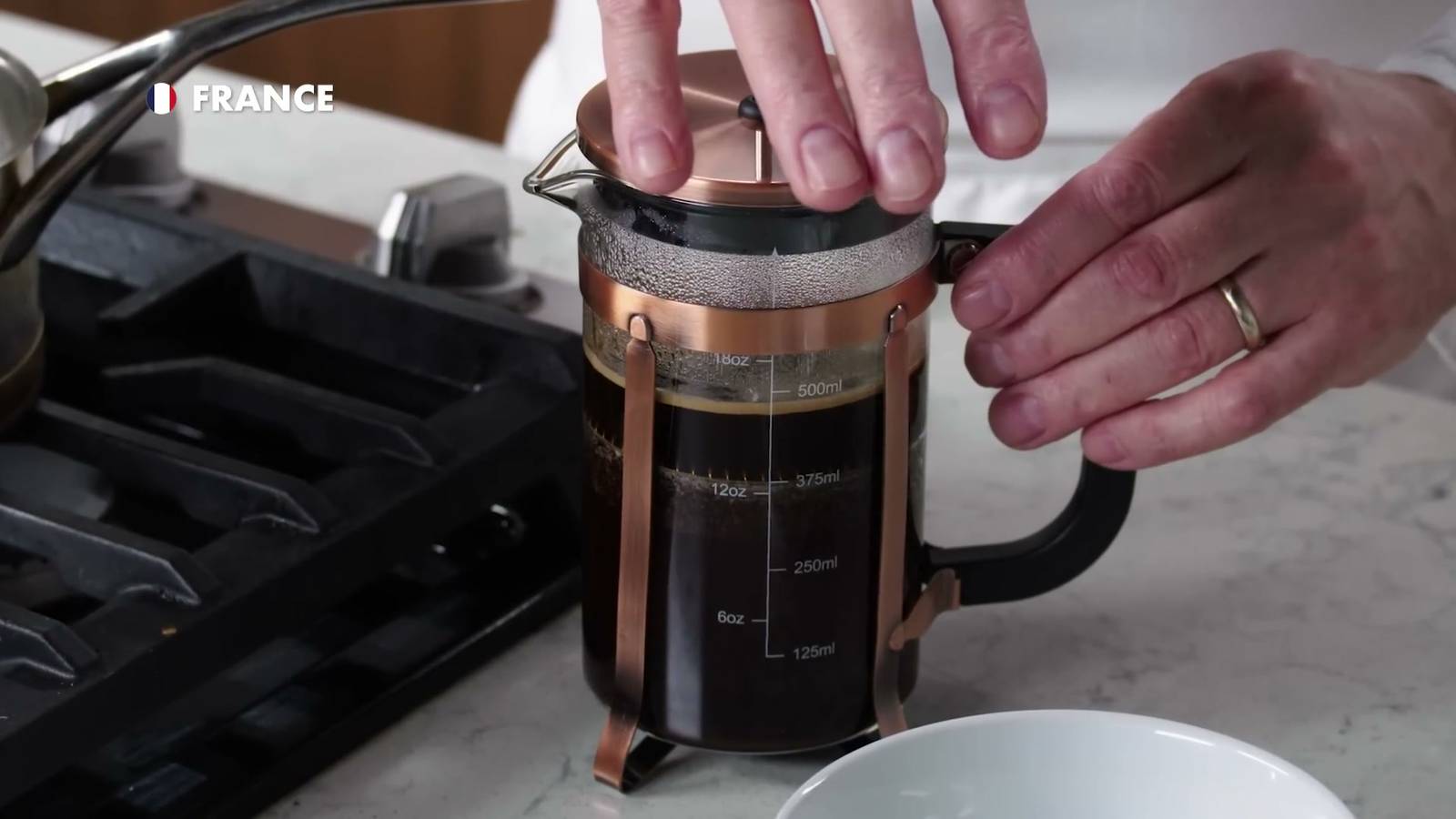
French people love coffee and start drinking it at a young age, like 13 or 14. It is described as being in their DNA and in their tradition.
The coffee is made in a French press, where the grounds are fully steeped in water for a long period of time. This method brings more oil and more body flavor from the coffee grounds.
Colombian coffee is used, ground only a few minutes earlier. It is not ground too fine, because finer grounds may pass through the filter. Two big spoons of coffee are added.
The metal filter at the bottom keeps the oil in the coffee instead of absorbing it like a paper filter, which helps keep a full-bodied flavor. The water should be at 200°F to extract flavor properly. If it is boiled, it disrupts the flavor.
The coffee is left for five or six minutes. Then the milk is warmed and whisked gently to create a little foam on top, almost like a cappuccino. When pressing the French press, it is done slowly so the grounds do not come out into the cup.
The foam is scooped on top. It is served in a traditional French bowl that is wide and deep, because French people love to dip croissants, pain au chocolat, tartines, and baguette into coffee.
Nigeria
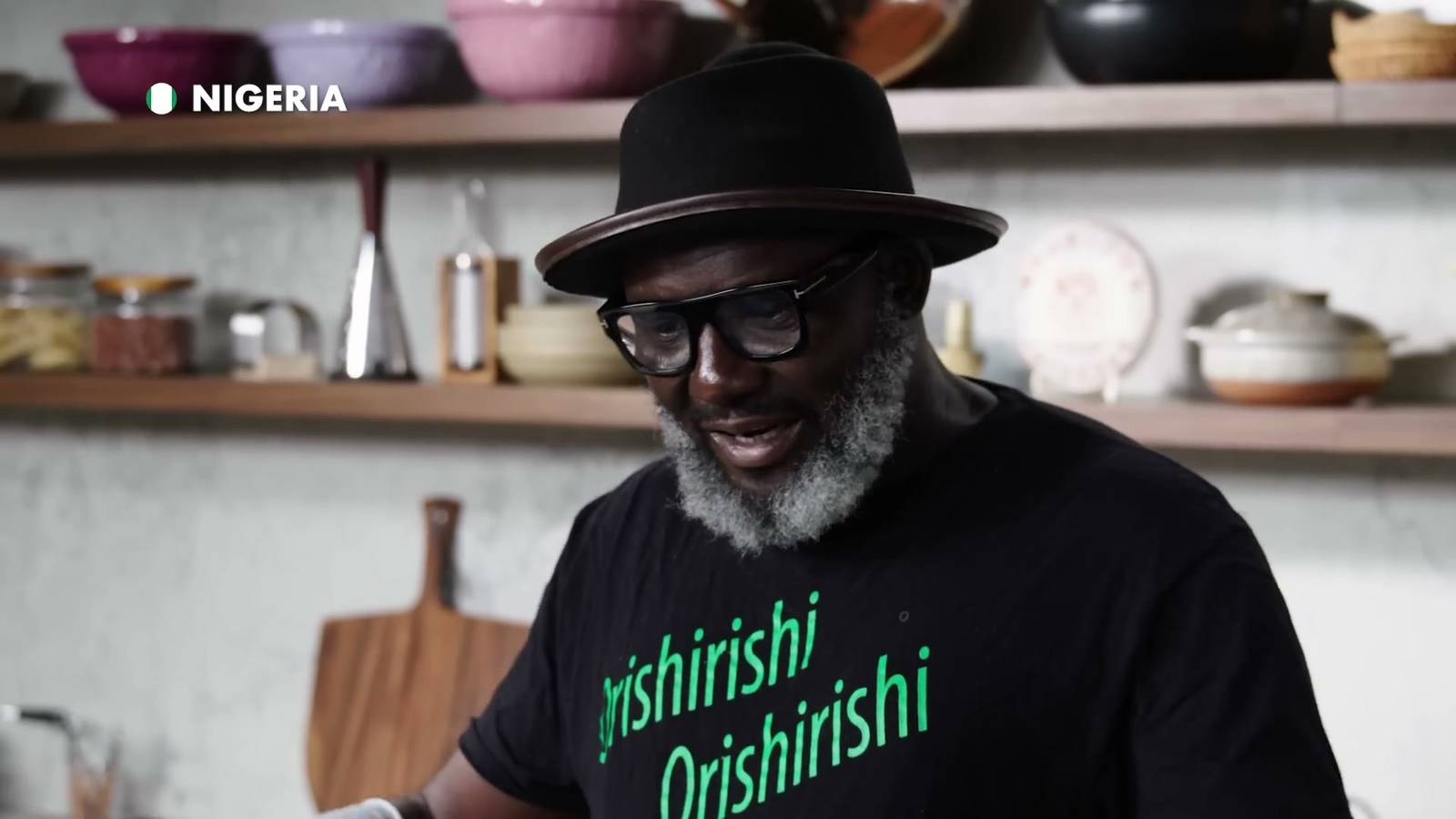
In Nigeria, the chef says, “We don’t do coffee in Nigeria. We do Nes cafe.” It is described as very popular.
The best place to get it is with the malam, at a small kiosk where everybody sits around a big giant dining table in the morning. They make the Nes cafe, egg, and bread.
To make it, one or one and a half portions of Nescafe are used, then sugar. The chef says the special thing about malam coffee is that it just has too much sugar. Canned milk is also added.
The drink is stirred, and the pouring technique is used to cool it down. The pour can be very long. This also helps the sugar, the milk, and everything blend very well together.
The result tastes very authentic and brings the chef back to Nigeria.
United States
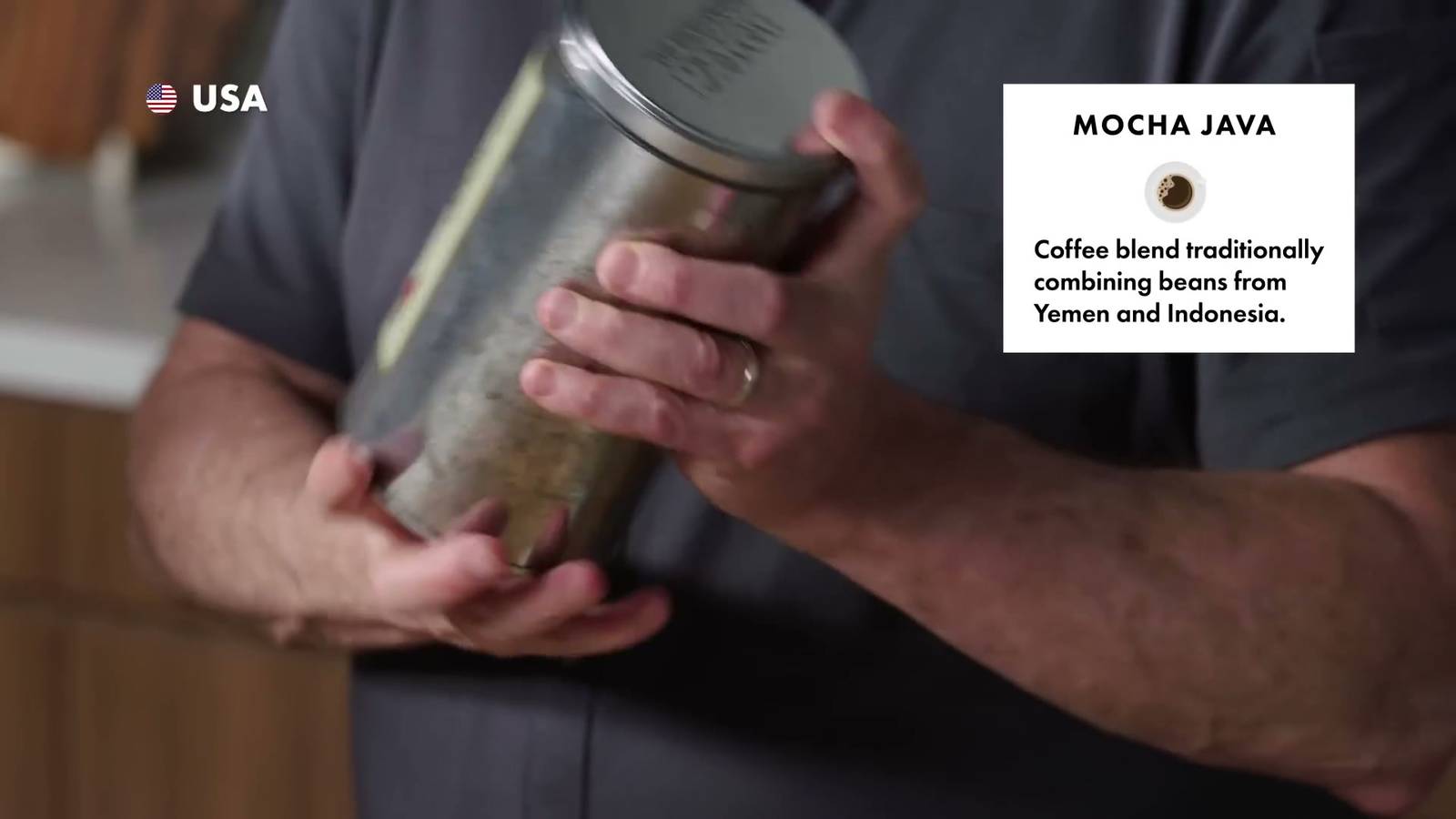
American coffee is described as the kind you get when you walk into a place, ask for a cup of coffee, and then doctor it up how you like it.
The chef likes to use whole beans, specifically mocha java, described with the words ripe blackberry, warm, plum, and honey. The grind is fine, but not super fine like espresso, because drip coffee works by water spraying over the grounds rather than being compressed through them.
The measurement used is two heaping tablespoons for one cup. The chef adds one, two, three, and a little extra for good luck, then closes the machine and starts brewing.
The drip coffee machine works by heating cold water from the reservoir and spraying it over the coffee filter. The brewed coffee should look nice and dark; if it is too light in the pot, it is a weak cup.
The chef likes a splash of half and half because it gives a luxurious, rich, creamy taste. The first taste is described as nostalgic, memorable, and a spiritual kind of experience.
Japan
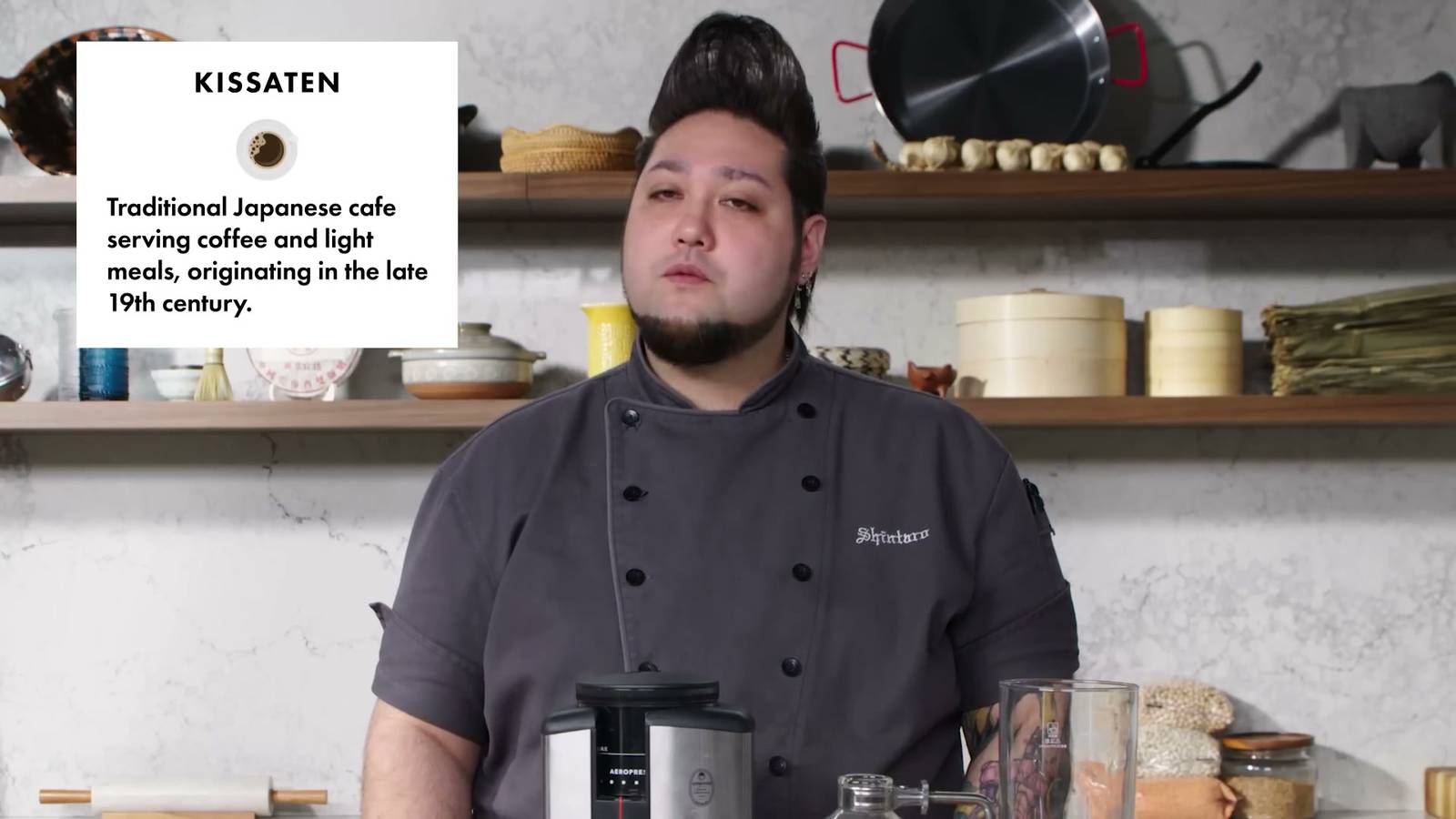
Siphon-style coffee is described as popular in Japan, especially in kisaten, cafes where people can order coffee, relax, and unwind. It is partially ceremonial and tastes really good.
The bean used is 50% maragogype, described as having a nice sour acidity, while also being very smooth with a little milky texture. Precision matters: 15 g of coffee is used for 250 ml of hot water.
If too much coffee is used, bitterness and sourness come out too much. If too little is used, it tastes watery. The grind should be slightly coarse, but still fine, right between espresso and French press.
The siphon is set up with a top part and a filter. The filter is wetted first. A hook keeps it in place, and once pressure comes up, the coffee will go down again. Water is measured into an electric heating siphon, which is preferred because it heats better than a traditional alcohol lamp.
This is called vacuum brewing. Pressure differences between the top and bottom move the water upward, brew the coffee, and then strain it back down. The cloth filter prevents coffee grounds from going into the bottom.
As soon as the top is set, the water comes up and the coffee is mixed so the grounds touch water evenly. After mixing for about 20 seconds, the heat is turned off. A final stir is done, and then the coffee naturally comes down.
The process is soothing to watch, and watching a barista make it in front of you in a kisaten is described as a very happy moment. The coffee is drunk black, without milk or sugar, to enjoy the maximum potential, aroma, and flavor of the coffee itself.
Algeria
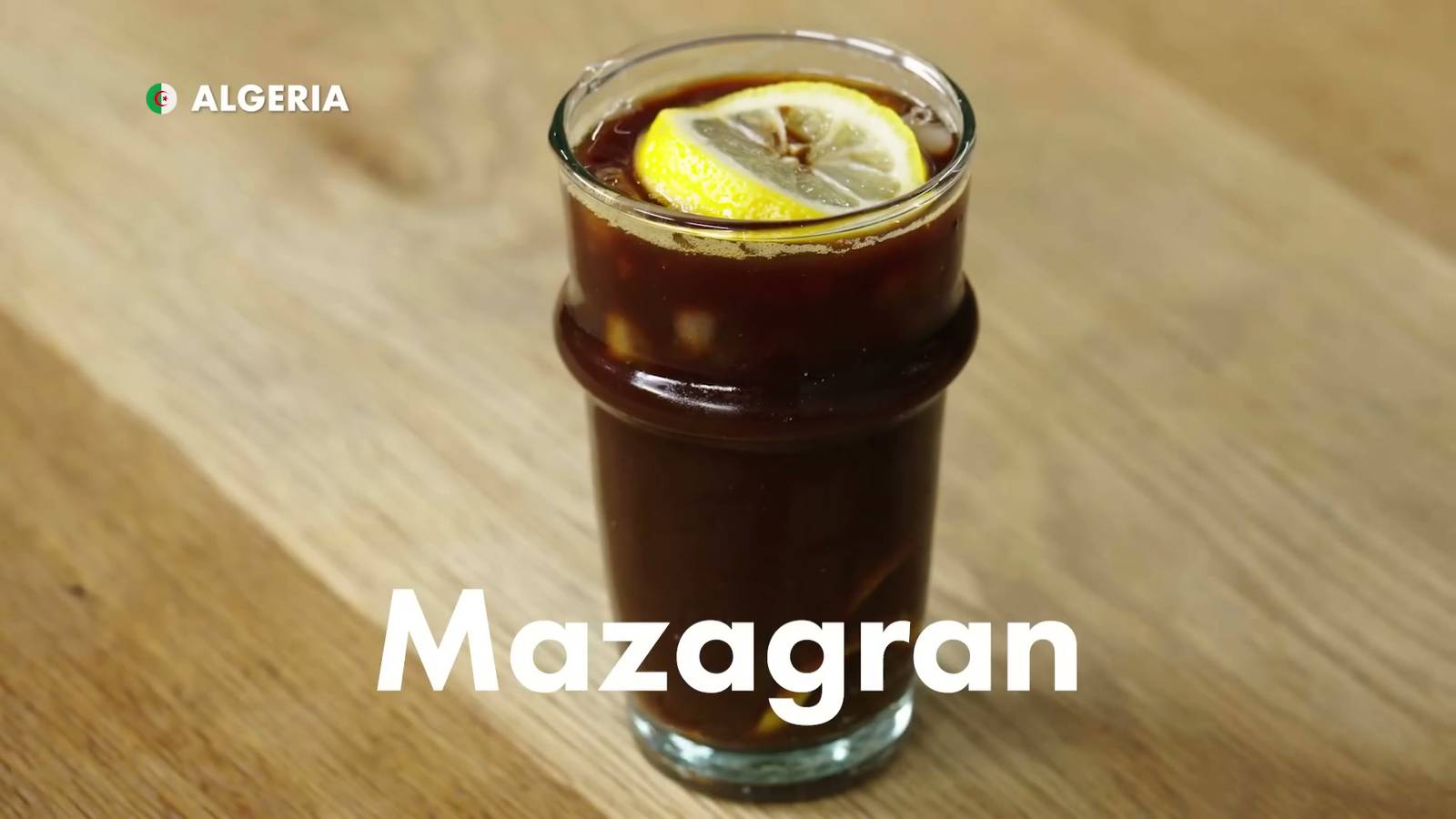
In Algeria, people are described as obsessed with coffee. They love coffee, and they love sugar and coffee.
The coffee is very special, super strong, and super sweet. It is called Mazagran, named after a town in Algeria. It is described as the first iced coffee in the world. Soldiers used to make it iced in Algeria during colonization so they could add a little rum.
It is made with an old-school coffee machine. Water goes in the bottom, coffee in the filter, and strong Algerian coffee is used. Two spoons are added. The coffee is very fine because it is for espresso, and it has a chocolate taste.
The machine is used on medium-low heat so it does not go too fast and overflow. Steam forces the water through the coffee, and the coffee starts brewing. The chef likes to open it to cool it off because it will be served iced.
The hot coffee is poured into a different mug. The color is like chocolate and very thick. Four ice cubes are added, then sugar while the coffee is still hot so it becomes almost like a syrup. Then two more ice cubes are added, followed by lemon juice. The chef also likes to add lime and lemon.
Then crushed ice is added. It almost feels like a coffee lemonade. It is served with a lemon wedge on the side in case more sourness is wanted. It is described as the best iced coffee.
Tick Tick Coffee
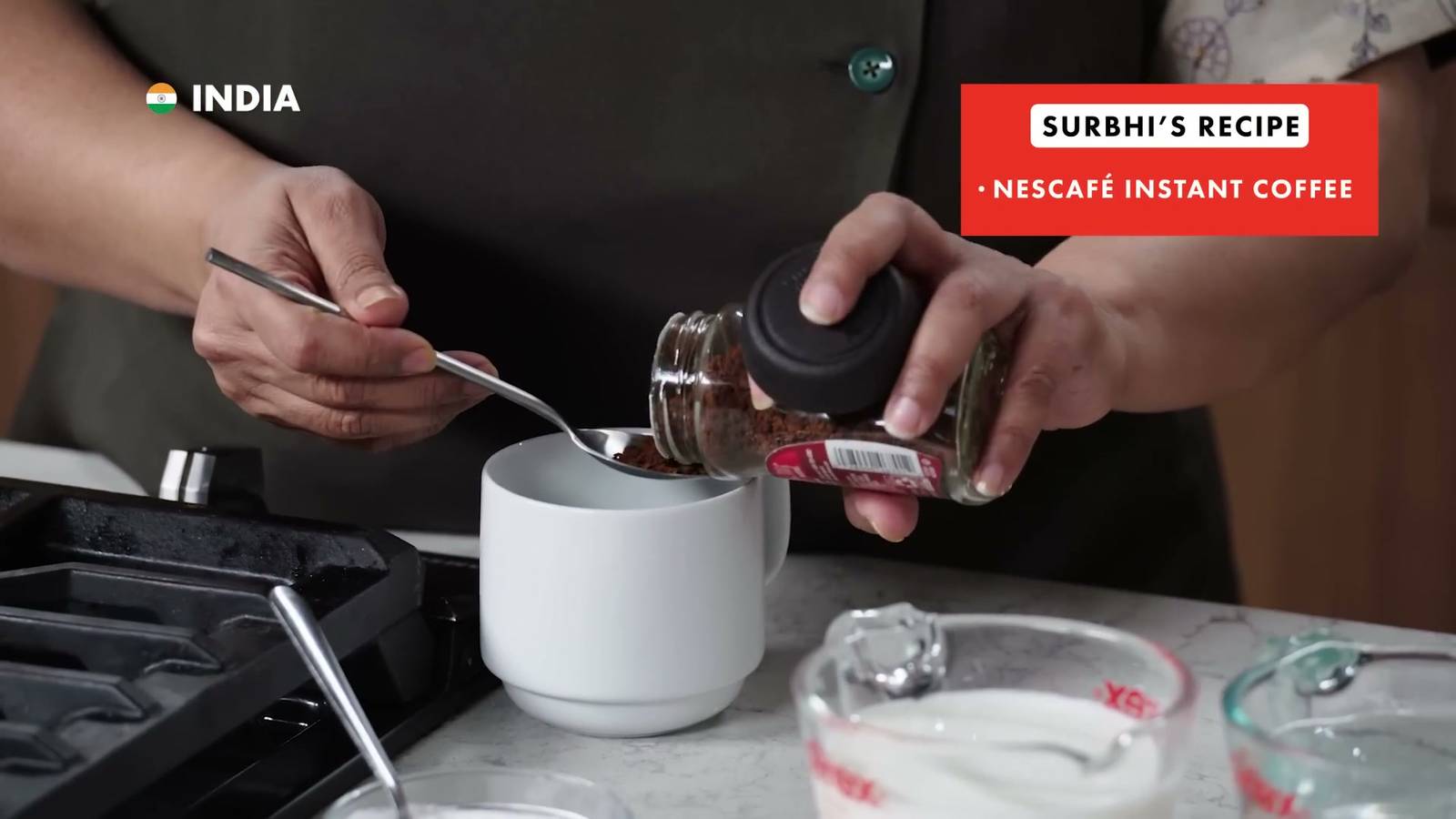
Another chef describes the coffee from childhood as “tick tick coffee,” named after the sound it makes while being made. In that household, many kids were given the responsibility of making it, and it was probably an entryway into learning how to cook.
Regular Nescafe is used. The chef likes it strong, so a couple of big heaping spoons are added. It cannot be made without sugar, because sugar helps mix the emulsion and helps it come together nicely.
Only a little bit of water is added at first. As it is mixed, the instant coffee melts quickly and changes color until it is almost white. Then milk is heated to make the drink warm. There are about 8 ounces, but slightly less is used because the chef likes it a little lighter, with a little bit of water in it.
A little bit is poured into the coffee mixture and then into the cup. It basically melts. The chef generally makes it for two people and says coffee should always make two so you can enjoy them.
The drink is described as smoky, sweet, milky, tasty, light, and hot.
China

Growing up, green tea was always a top drink option in Chinese culture for adults, not coffee. But there were instant coffees while growing up.
These instant coffees are described as very delicious and nostalgic, and the chef thinks they are having a comeback. The style shown is called “three in one,” meaning coffee, creamer, and sugar are already included.
Nothing else is needed besides water. It is very easy to make: open the packet, pour it into a mug, add hot water, and stir.
When tasted, it is really good. It is a bit sweet now for the chef, but as a dessert drink after meals, it is perfect.
Turkey
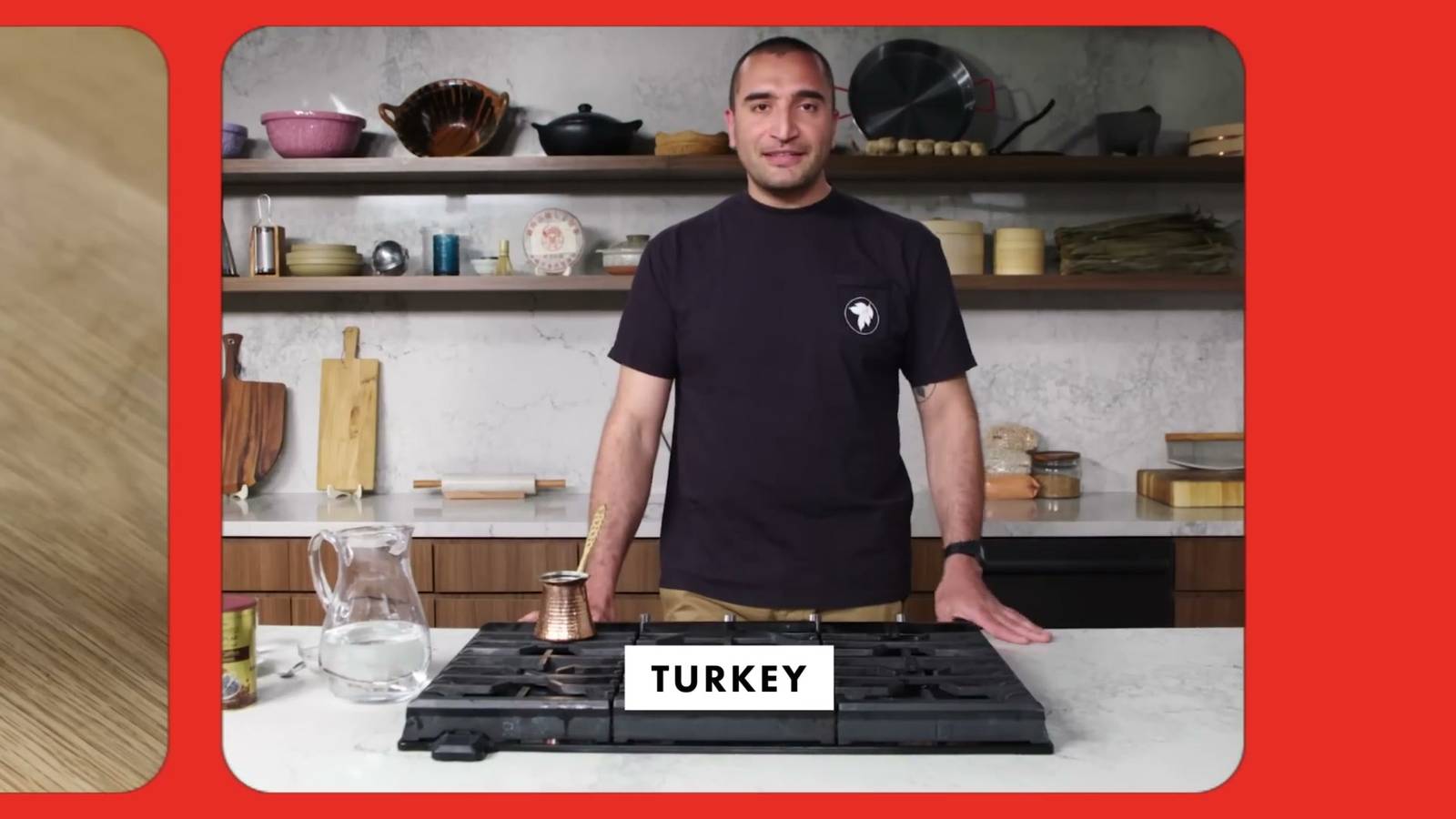
Turkish coffee is described as so important in Turkish culture that it is in every part of life, from daily routines to wedding ceremonies. It is also described as the first coffee that came out to the Western world.
The Ottomans are described as the people who thought coffee was amazing and figured out a way to use the bitter beans by roasting them and cooking them in a pan.
Turkish coffee uses medium-roasted and finely ground coffee. It should be so fine it almost feels like flour, probably as fine as it gets. Because it is hard to grind that fine at home, people generally buy it already ground.
It is one of the strongest coffees, which is why a medium roast is used. The water is measured using the Turkish coffee mug so the amount is exact. One teaspoon of coffee is added per mug, maybe a little more.
At this point, it should not really be stirred. It is cooked slowly over very light heat. This is described as the biggest difference between Turkish coffee and other coffees: the coffee is actually cooked in the pot.
The goal is to keep the grounds at the bottom and not burn them. As it starts to boil, the grounds disperse in the water evenly and then fall back down in the cup. A little foam on top is important and is said to show the skill of the coffee maker.
The coffee is slowly brought to a boil, and a little is poured into each cup to distribute the foam. Then it is brought back up again. Every time it boils, the foam comes up.
Turkish coffee is never drunk alone, which is why two cups are made. Like espresso, it should always be served with a cup of water to cleanse the palate before and ease it after drinking.
It should be drunk slowly, with slow sips, because the grounds are still in it. If some grounds get into your mouth, that is fine; it is just more flavor.
After drinking, the saucer is placed upside down on the mug, the mug is shaken or swirled, and then flipped. Then someone with extreme skills reads the coffee grounds. The reading described includes someone on a horse, a woman at the crossroads, a man with a uniform, and birds bringing news.
Mexico
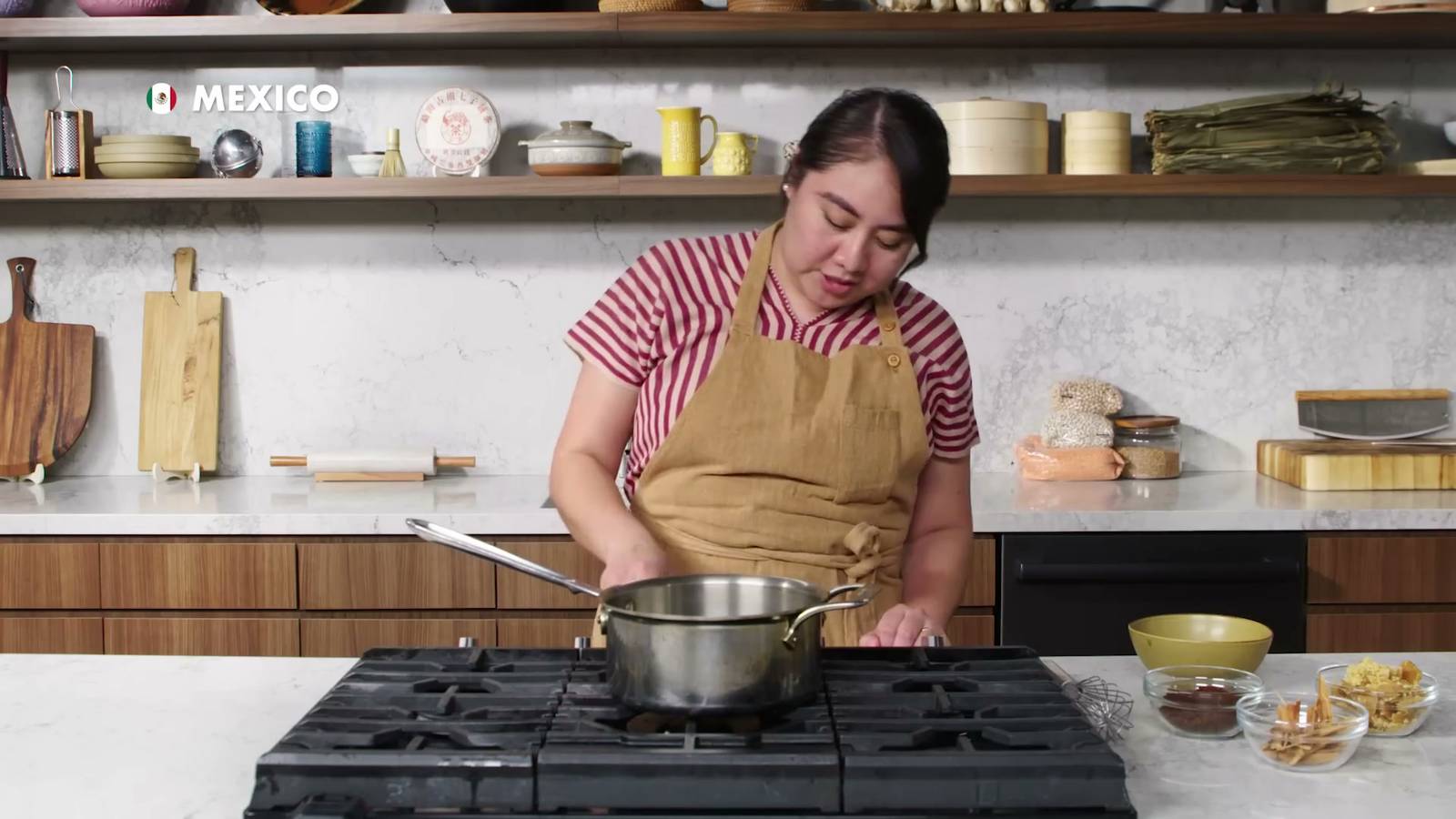
The chef makes café de olla, described as a very traditional way to drink coffee in Mexico. The chef is from Oaxaca and is used to drinking café de olla made with instant coffee, cinnamon, and piloncillo.
It is made in a stainless steel pot, described as the modern way to make café de olla. The stove is turned to medium-high heat. Once the water boils, cinnamon and piloncillo are added.
Piloncillo is described as unrefined sugar. It is sweet, but it also has a caramelized flavor. Once it is blended into the water, the coffee is added and the heat is lowered a little.
The chef says that Mexico produces a lot of coffee, but still drinks instant coffee in the majority because it is very easy to make and serve.
It is often drunk in a bowl instead of a cup because people like to dip bread into the coffee. The drink reminds the chef of home, of mornings in the kitchen, and of seeing the hot pot there.
Ecuador
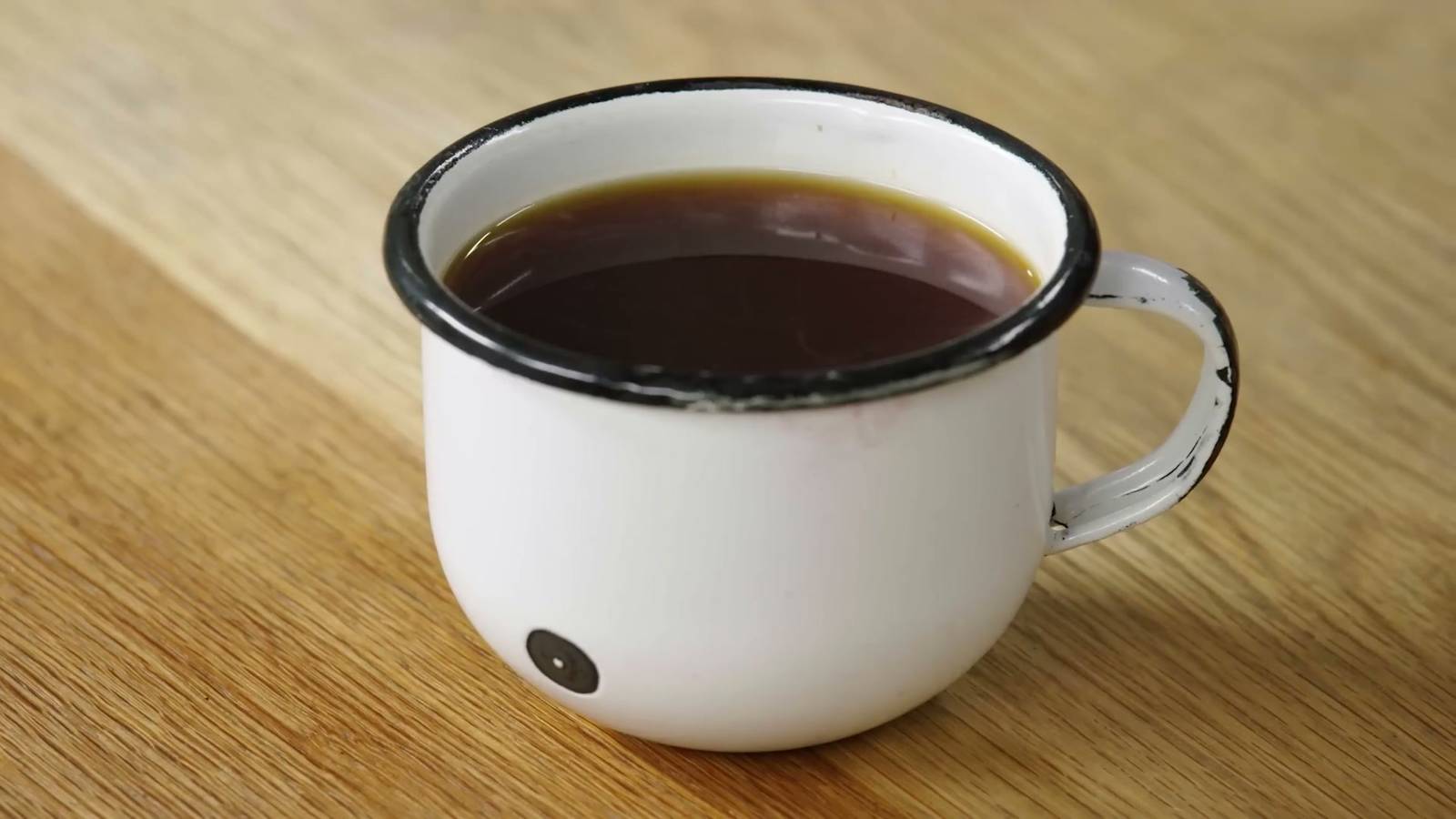
Instant coffee is described as the most popular coffee in Ecuador. But lately, in the last few years, Ecuador has been rising in the coffee world and exporting more coffee into the States.
The chef says Ecuador can grow some of the finest coffees because it is right in the center of the world, gets the sun the most throughout the year, and can grow more coffee throughout the whole seasons.
The coffee used is from Loja, a highland of Ecuador. It is a medium blend and is used for the chef’s mother’s recipe.
In that recipe, water is boiled with cinnamon sticks and anise to create a great aroma. It brings the chef back to childhood and to having a first cup of coffee before going to grade school. The chef says that if you are Ecuadorian, you do have coffee when you are five and above.
About four or five pieces of anise are used, not too much. The cinnamon stick is from Ecuador and is described as a little different and very strong, so only a little flake or particle is added, not the whole thing. The coffee is ground to a medium grind.
The method used is pour over, with a cloth filter that looks like a sock but is not a sock. The filter is placed over the mug, and the water is poured slowly in a circular motion. The filter can also be dropped inside the mug.
The chef likes the coffee black with a little sugar. The aroma from the cinnamon sticks, anise, and coffee blends nicely, and milk is not needed. It tastes just like home.
FAQ
- How many chefs and countries are featured?
There are 10 different chefs from 10 different countries making coffee.
- What coffee method is used in France?
A French press is used, with coffee steeped fully in water for five or six minutes and served with warmed, lightly whisked milk foam.
- What is popular in Nigeria?
The chef says Nigeria does Nescafe, especially malam-style Nescafe with sugar and canned milk.
- What is special about Japanese siphon coffee?
It is partially ceremonial, uses precise grinding and measurement, and is made through vacuum brewing with a soothing process.
- What is Algerian Mazagran?
It is a super strong, super sweet iced coffee made with espresso-style coffee, ice, sugar, and lemon or lime.
- Why is Turkish coffee served slowly?
Because the grounds remain in the cup, it should be drunk with slow sips. It is also traditionally served with water.
- What is in Mexican café de olla here?
It is made with instant coffee, cinnamon, and piloncillo in a stainless steel pot.
- How is the Ecuadorian coffee prepared?
It is made with coffee from Loja, along with cinnamon and anise, using a pour-over cloth filter.

I am a Junior Web Developer for Oswald Technologies. I am an accomplished coder and programmer, and I enjoy using my skills to contribute to the exciting technological advances that happen every day at Oswald Tech.